Sustainability
Compostable vs. Biodegradable Packaging: A Practical Comparison for Everyday Shoppers
Two coffee cups sit side by side on a shelf. One is printed with the word biodegradable; the other says compostable. They look the same, feel the same, and cost roughly the same. They are not the same. Each word describes a different promise, and each promise comes with its own set of conditions about where the packaging has to end up. Mix them up — or assume either one means "just throw it away" — and good intentions turn into contamination in the recycling bin, or a soggy lump of nothing-in-particular at the back of the garden. Here is what each term actually commits to, what to do with the packaging once you get it home, and which claims deserve a second look before you pay for them.
Biodegradable: A Word With No Deadline
It sounds like a promise. In practice it is closer to a description of a material's potential. Biodegradable means that living organisms — bacteria, fungi, sometimes insects — are capable of breaking the material down. The word carries no deadline, no specified environment, and no requirement about what is left behind when the process finishes.
That gap matters more than most shoppers realise. A wooden coffee stirrer is biodegradable. So is a cotton T-shirt, a sheet of uncoated paper, and an orange peel. So, technically, is a plastic item that will sit in a hedgerow for a decade before anything much happens to it. The label cannot tell you which of those you are holding.
There is a further wrinkle. Some materials sold as biodegradable only break down in the warm, moist, microbe-rich conditions of an industrial facility. Others — the oxo-degradable plastics, treated to fragment when exposed to light and heat — break into ever-smaller pieces rather than into living matter, which is why they have been restricted in the EU. Fragments are not compost. They are litter you cannot pick up.
The useful reading: treat biodegradable as the beginning of a question, not the answer to one.
Compostable: A Deadline, a Place and a Test
Compostable is the stricter word, though it is not always used strictly. Properly, it means an item will break down within a defined period, in a defined composting system, into water, carbon dioxide, biomass and minerals — leaving no visible fragments, no toxic residue, and no harm to plants grown in the finished compost.
In Europe, the reference point for packaging is EN 13432, the standard behind the seedling logo you see on cups, cutlery and thin film. Certification against it involves testing for disintegration, biodegradation, chemical composition and ecotoxicity. That is a genuinely higher bar than biodegradable, and it is why the mark is worth looking for.
The catch is hidden inside the phrase "defined composting system", which almost always means an industrial one. The sustained heat, aeration and turnover of a commercial facility are not easily reproduced at the bottom of a garden. A cup that disappears in twelve weeks at 55°C may still be sitting in your heap, entirely intact and instantly recognisable, two summers later.
This is why you increasingly see two different claims on the shelf. Industrially compostable requires a collection service that accepts it. Home compostable is certified to separate standards — which vary by country — and is meant to break down in a cooler, slower garden system. It usually takes far longer.
The Home Heap and the Industrial Facility
Most garden compost heaps are honest, inconsistent things. They run hot after a big addition of grass clippings and cool again for weeks. They get turned when someone remembers. That variability is exactly what a compostable bioplastic such as PLA is least able to cope with. It was designed for a controlled process, and a domestic heap is not a controlled process.
So before you buy a compostable item, ask a practical question: where will it physically go? If your council collects food waste and accepts compostable packaging, you have a route. If it does not — and many don't, or accept only food scraps — then the pack has no correct destination in your home. It will go to general waste, where it will not compost, and where it may generate methane as it slowly breaks down without oxygen.
In that situation, the better choice is often the unglamorous one: a reusable container, or packaging made from paper, glass, steel or plain cardboard that already has a working disposal route in your area.
How to Dispose of It, Step by Step
Once the packaging is in your kitchen, the label on the front is the least useful part of it. Work from the back and from your council's rules, in this order:
- Turn the item over. Look for a certification mark, a standard number, and any wording about where it belongs. A logo with no standard behind it tells you very little.
- Decide the bin before you leave the kitchen. Compostable cups, lids, cutlery and films go into the food-waste caddy — but only if your council lists them as accepted. Fibre bowls and paper wraps may go into food waste where accepted, or into a home heap if they are certified home compostable.
- Keep compostables out of the recycling bin. A plant-based cup looks a great deal like a PET one to an optical sorter, and the wrong polymer in a bale lowers the quality of everything around it.
- Re-check your council's list twice a year. Rules change, and "compostable packaging" is frequently a separate line item from "food waste". Some authorities accept it; some explicitly ask you not to.
- Scrape, don't rinse, for compost. A quick scrape is enough for the caddy. Greasy fibre, on the other hand, is generally unwelcome in paper recycling.
- When you genuinely can't tell, use general waste. One mystery item can cause an entire food-waste load to be rejected, which undoes far more good than the item itself ever promised.
Claims That Deserve a Second Look
- "Biodegradable" with no standard and no timeframe. The weakest claim on the shelf. It is a material property, not a disposal instruction.
- "Plant-based" and "bio-based". These describe where the carbon came from, not what happens afterwards. A bottle made from sugarcane can be ordinary, non-compostable plastic.
- "Eco-friendly", "green", "natural", "planet-positive". Vague, unverifiable, and not regulated as disposal guidance. They are marketing, not instructions.
- "Plastic-free" on a bioplastic item. Sometimes defensible as a definition, useless as advice. Ask the only question that matters: which bin?
- Anything oxo-degradable. Designed to fragment, not to break down. Avoid it.
- Compostable claims without a certification mark. If there is no logo and no referenced standard, assume no industrial facility near you will take it.
- "Recyclable" on a compostable cup. Almost always wrong in practice, and the fastest way to contaminate a recycling stream.
- Grease-resistant moulded fibre bowls. Ask what the coating is. Some fibre packaging has come under scrutiny for fluorinated coatings that have no place in compost, particularly if you spread the finished material on a vegetable bed.
The Habit That Beats Both Labels
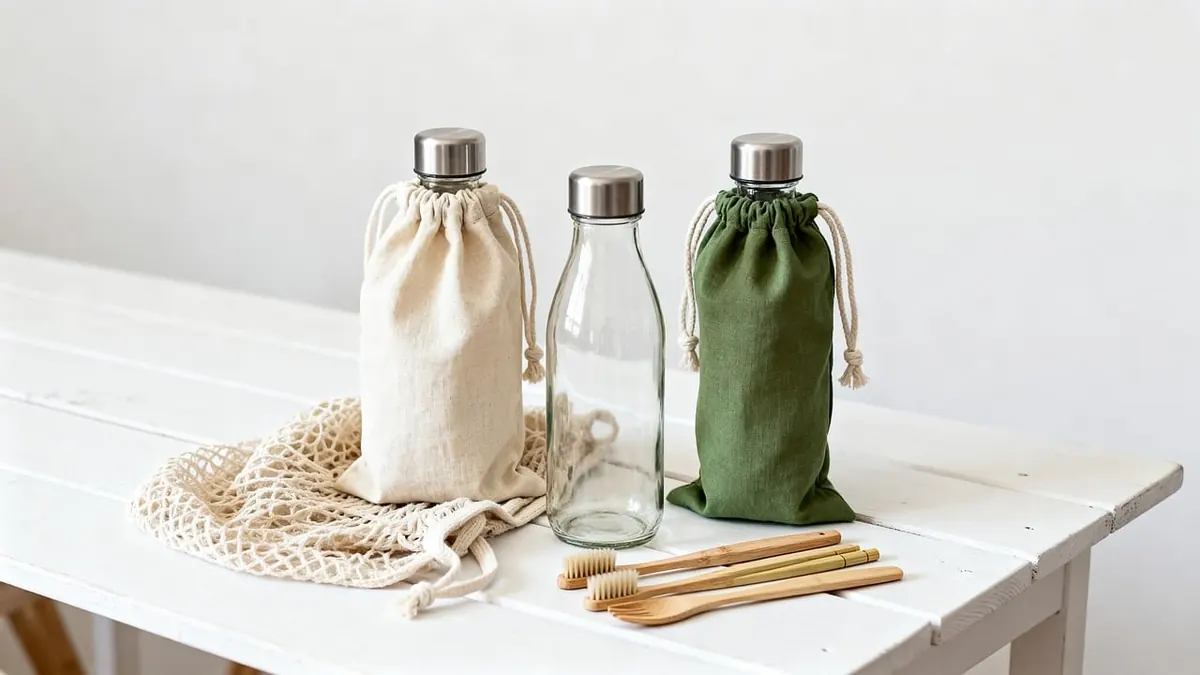
The most reliable way to cut packaging waste is not a clever material; it is a shorter trip. A cup you bring yourself, a bread bag you reuse for months, loose produce instead of a tray wrapped in film — none of these need a certification mark, because none of them need to be disposed of at all.
For everything else, keep three things in your head: read the back rather than the front, know what your council actually collects, and be sceptical of any claim that doesn't name a standard or a bin. Compostable packaging is a real improvement over conventional plastic when it reaches the right facility. When it doesn't, it is just a more expensive thing in the wrong place.
Photo: webandi / Pixabay
Related Articles